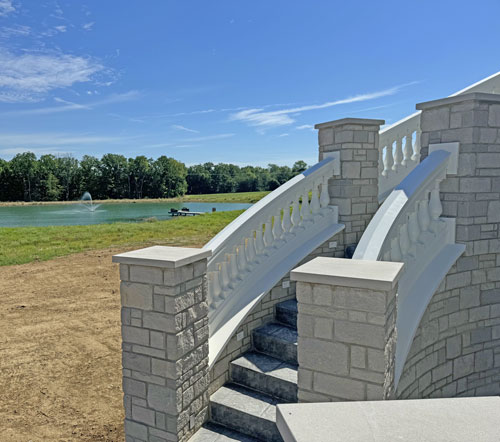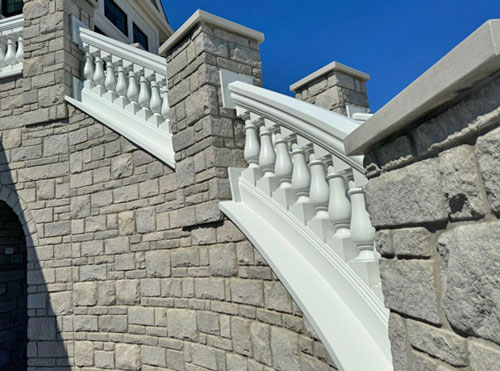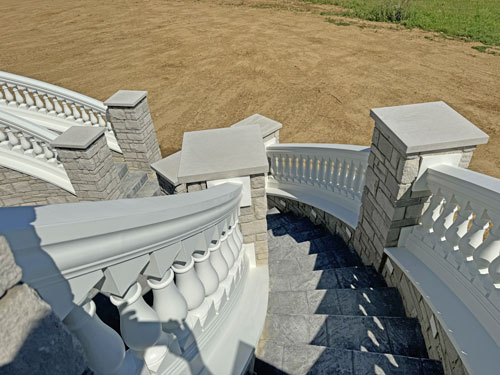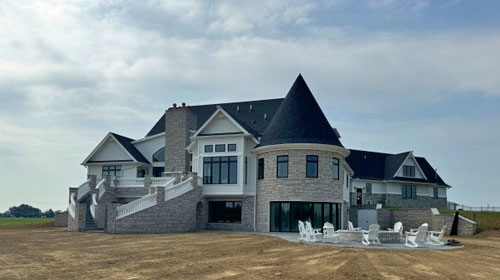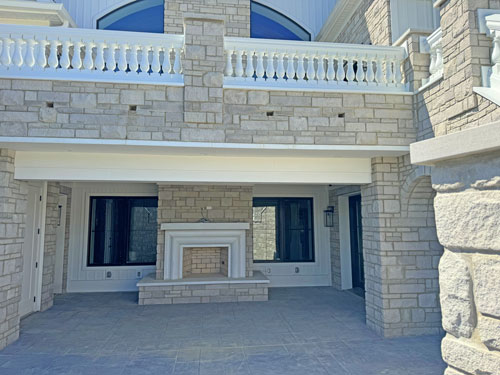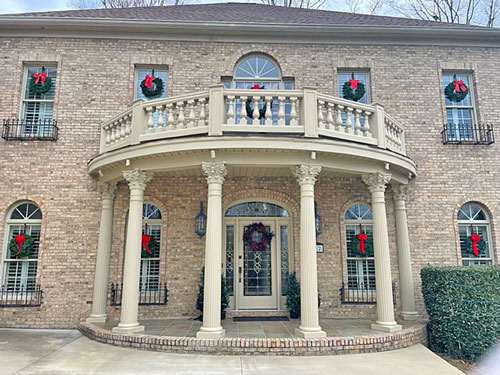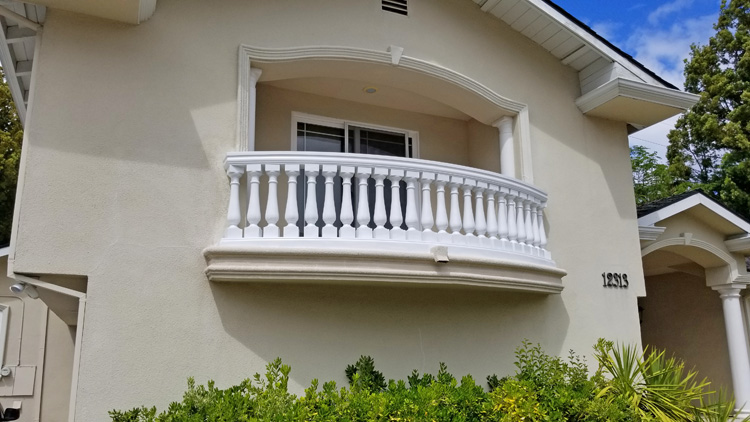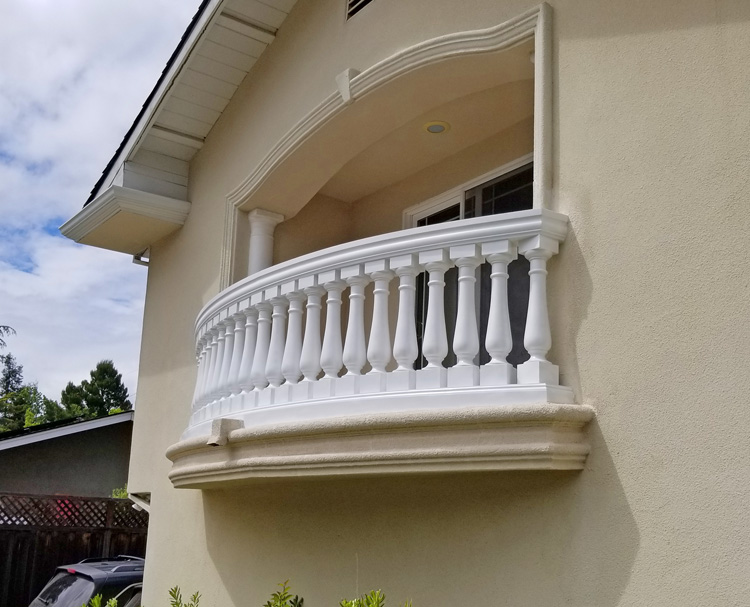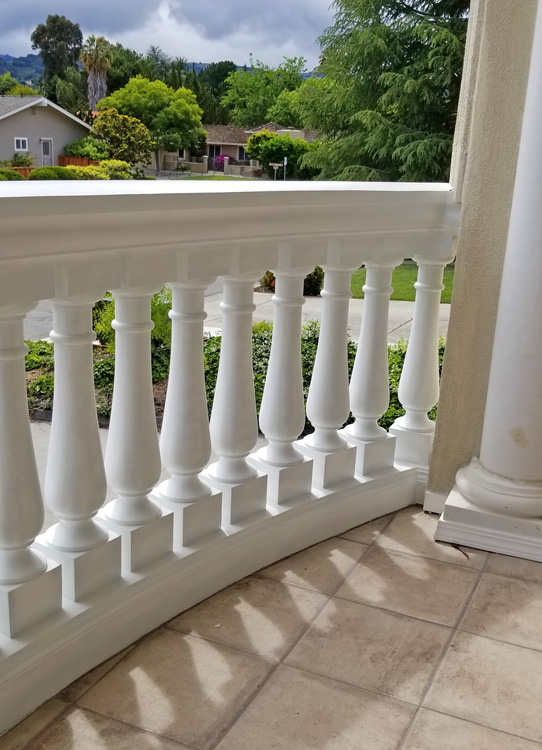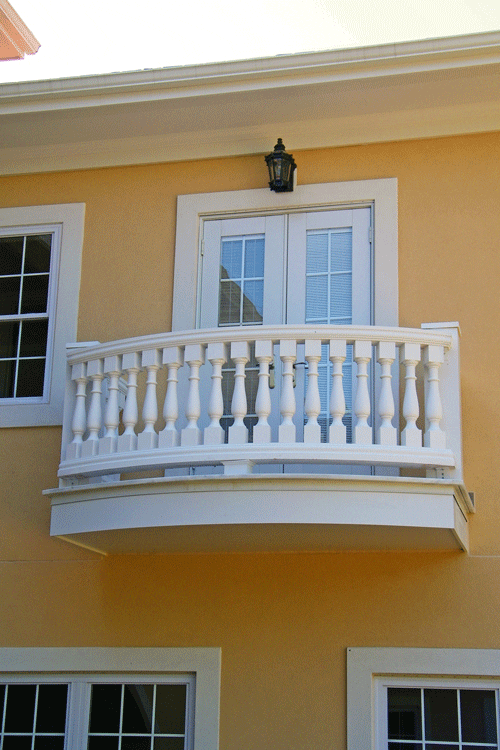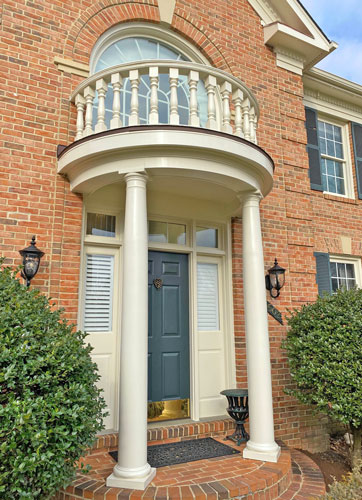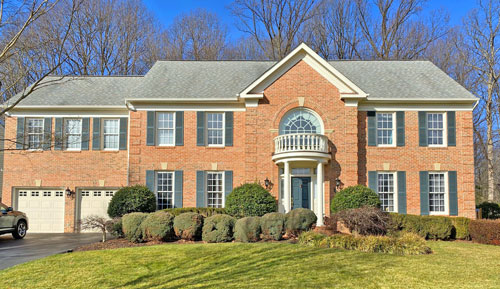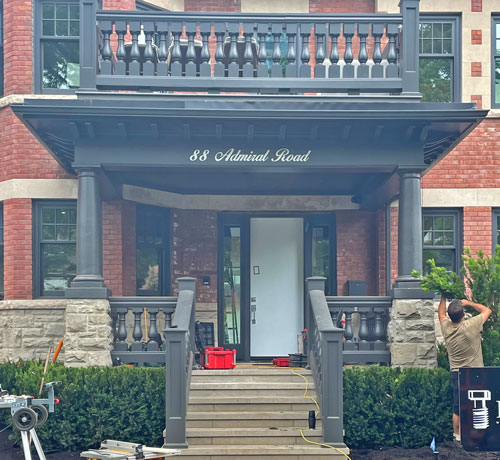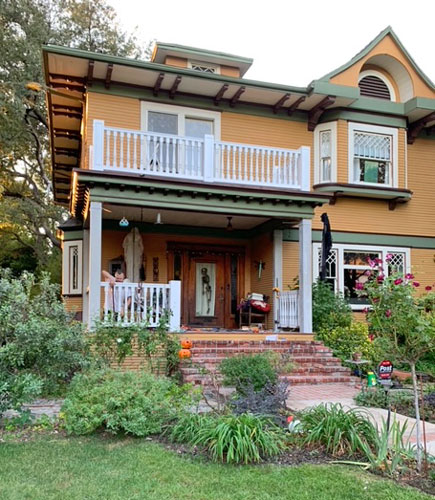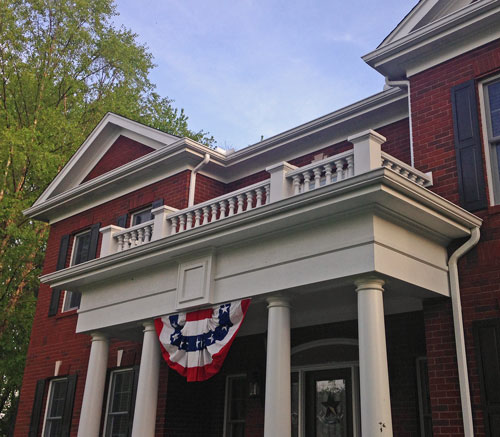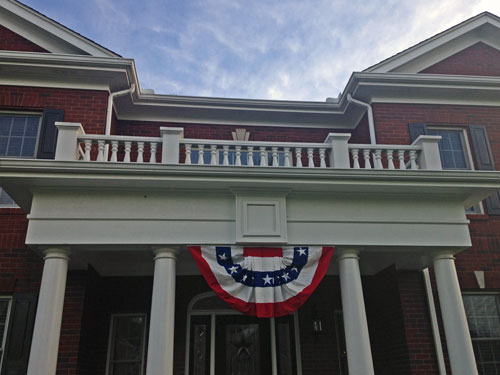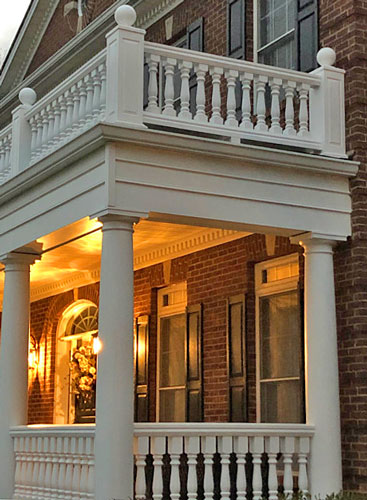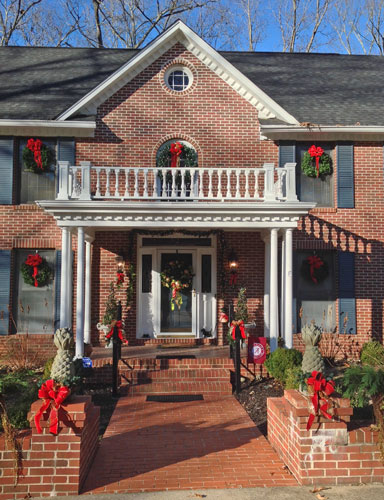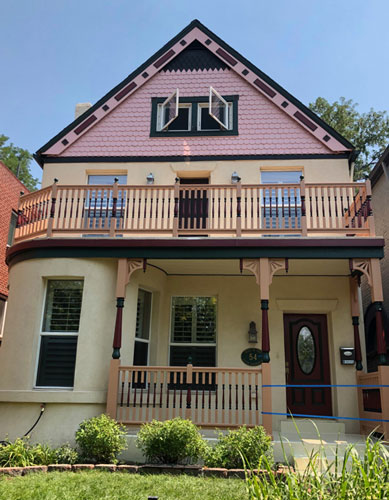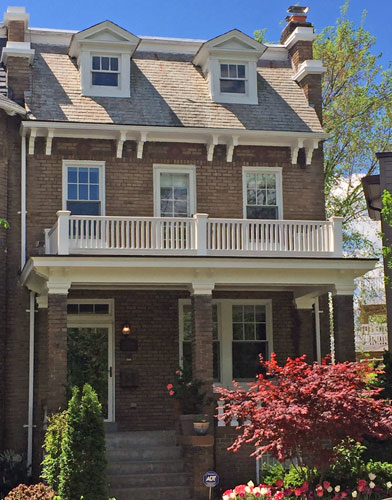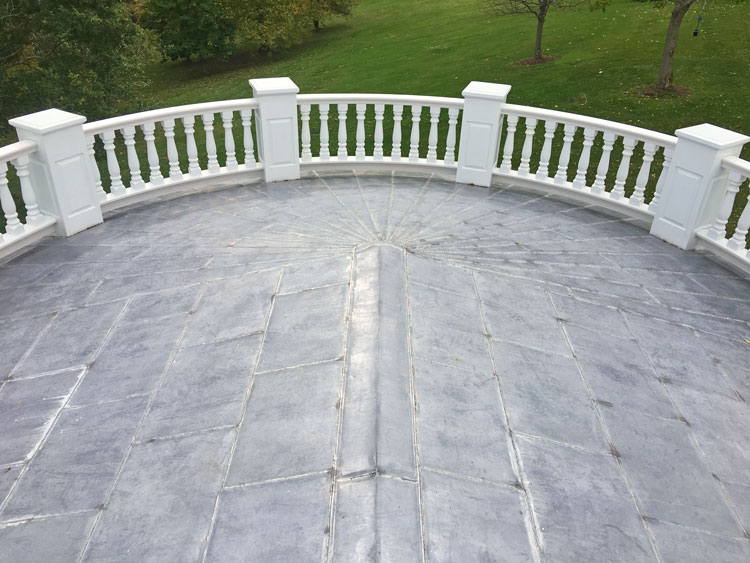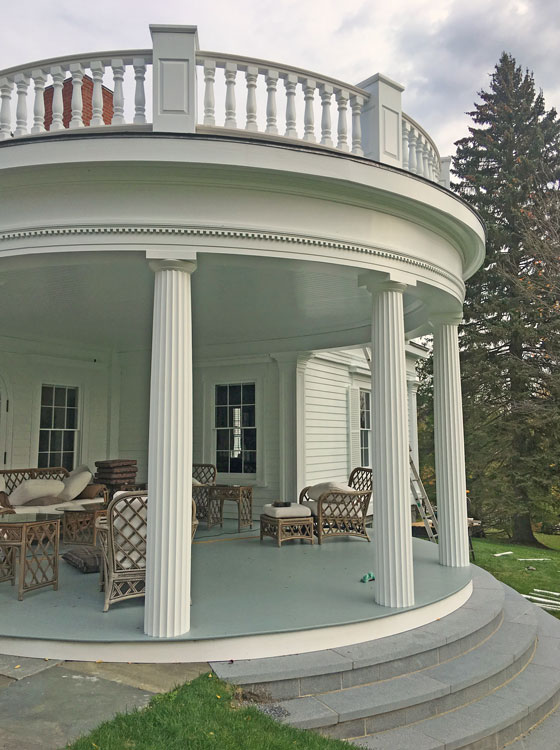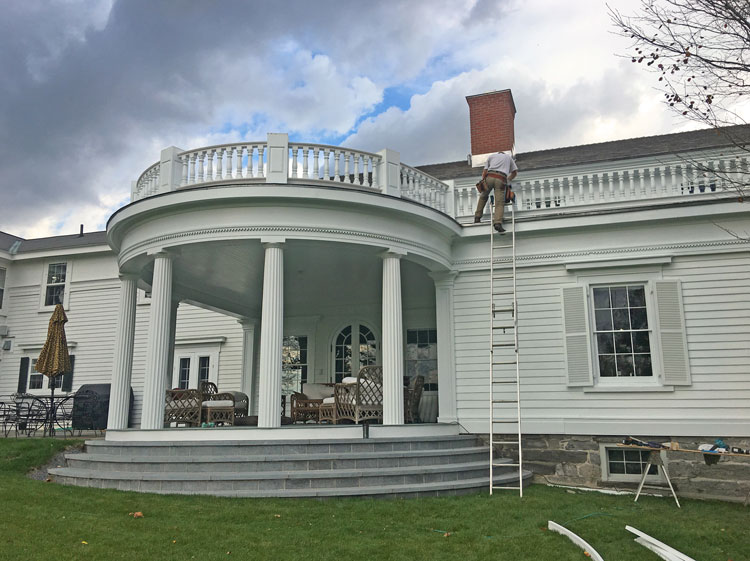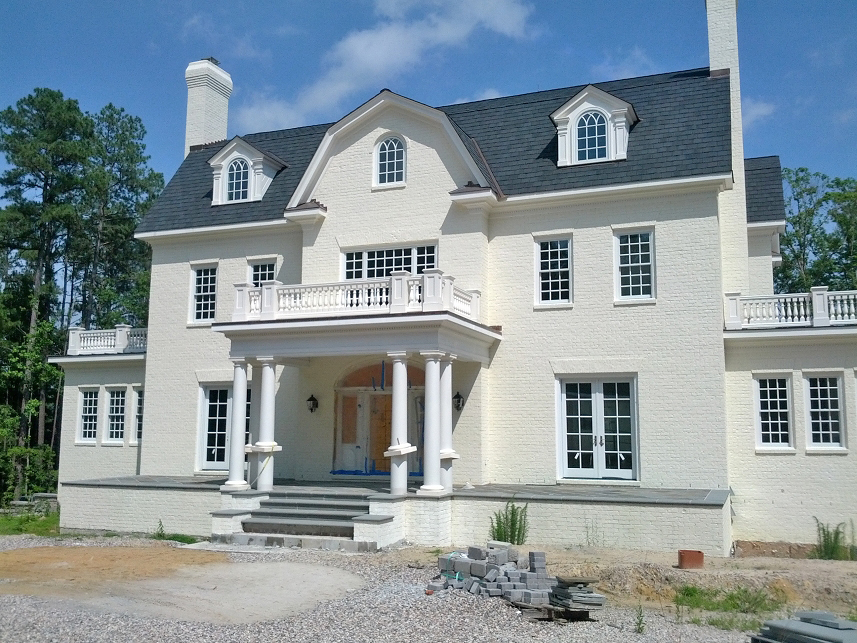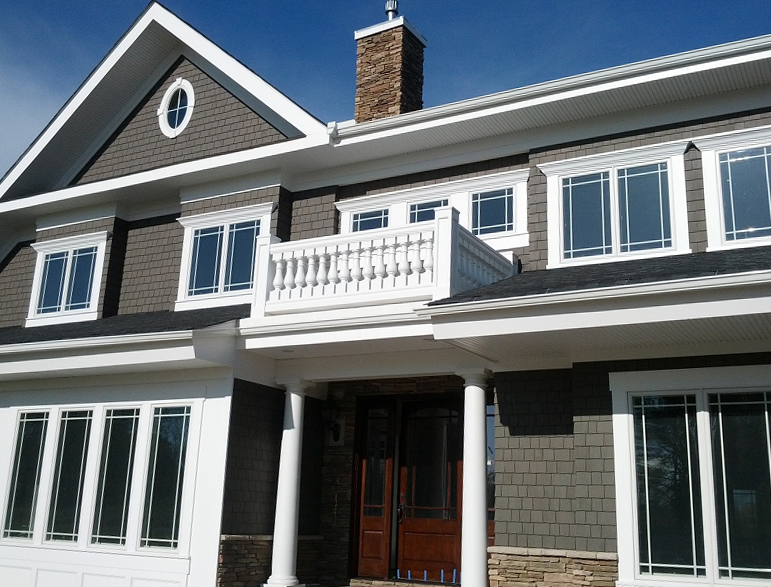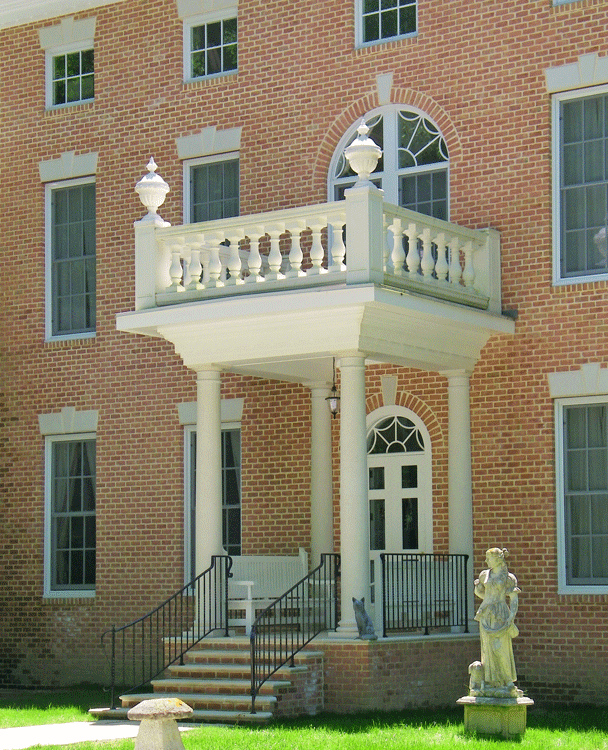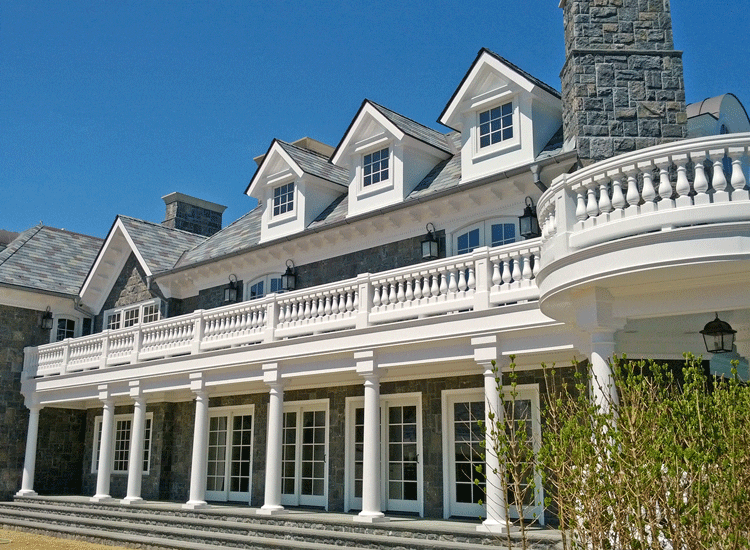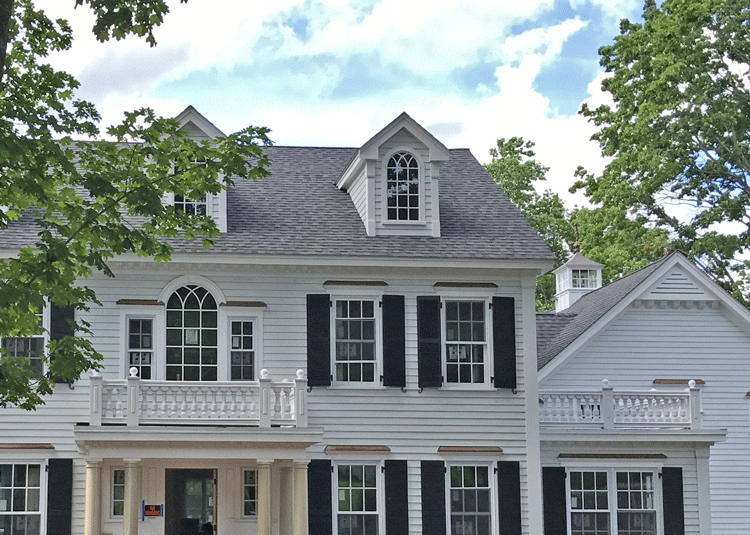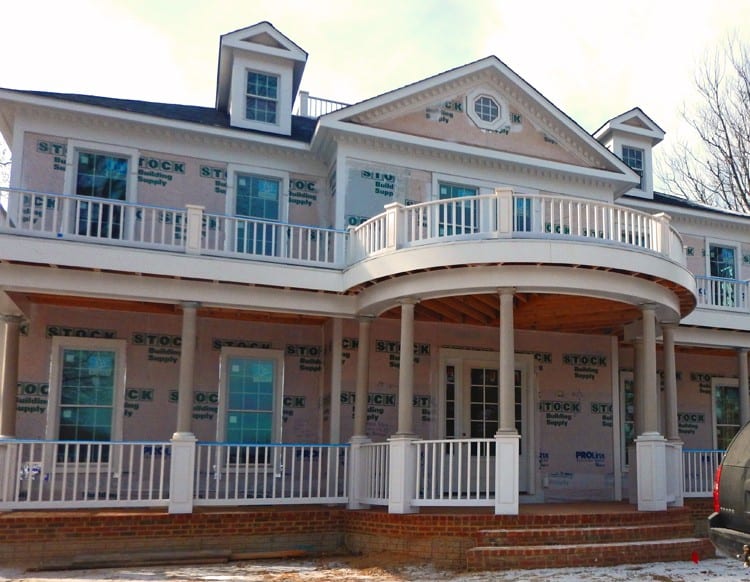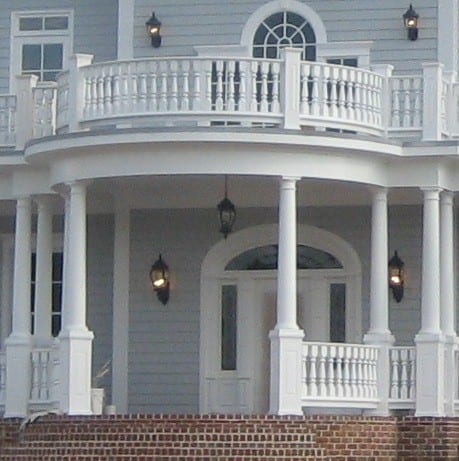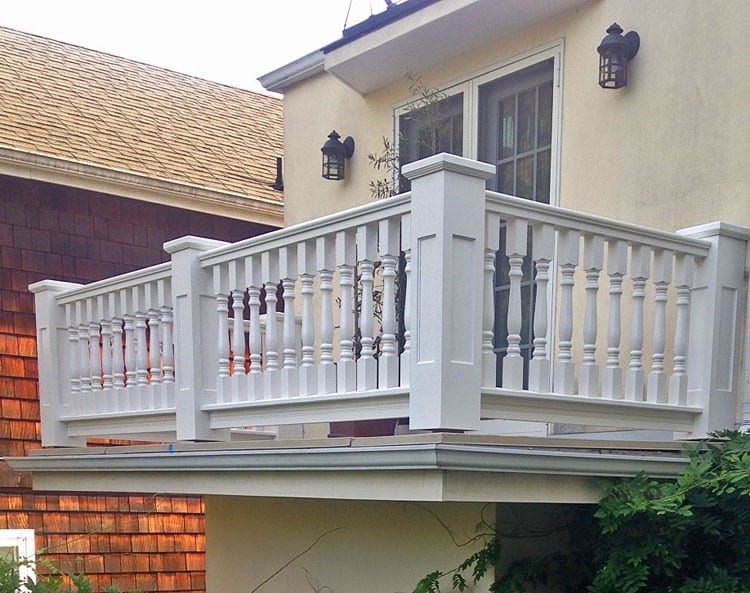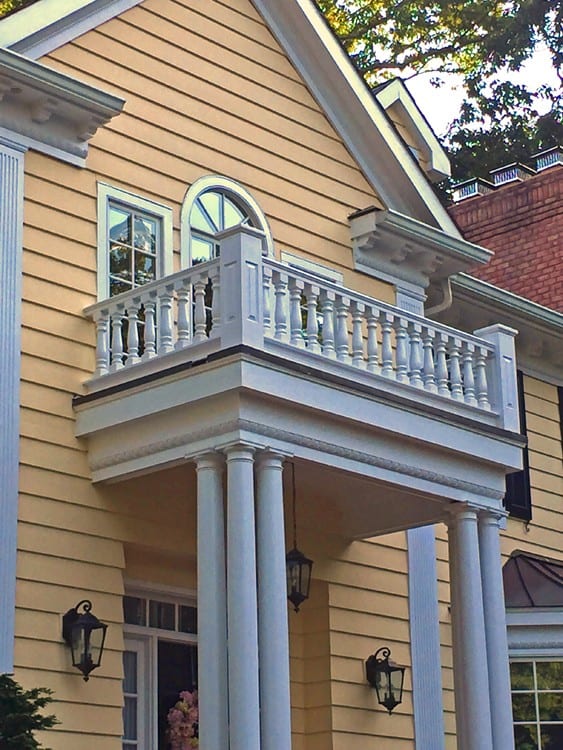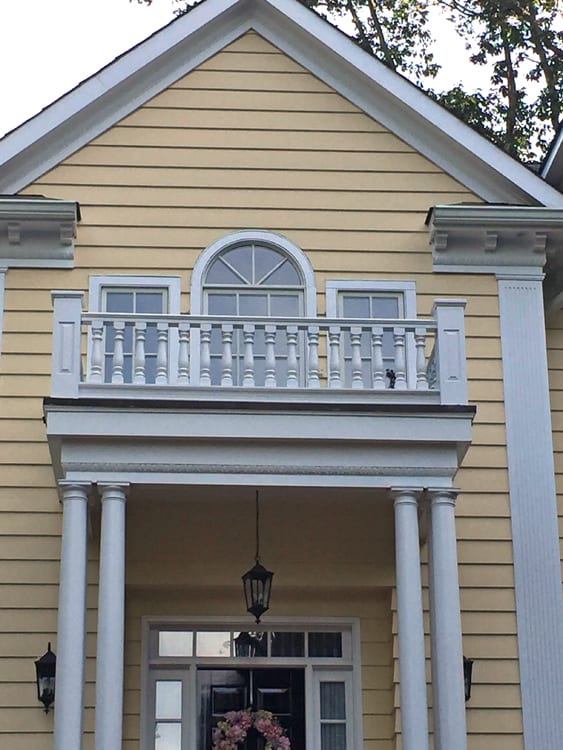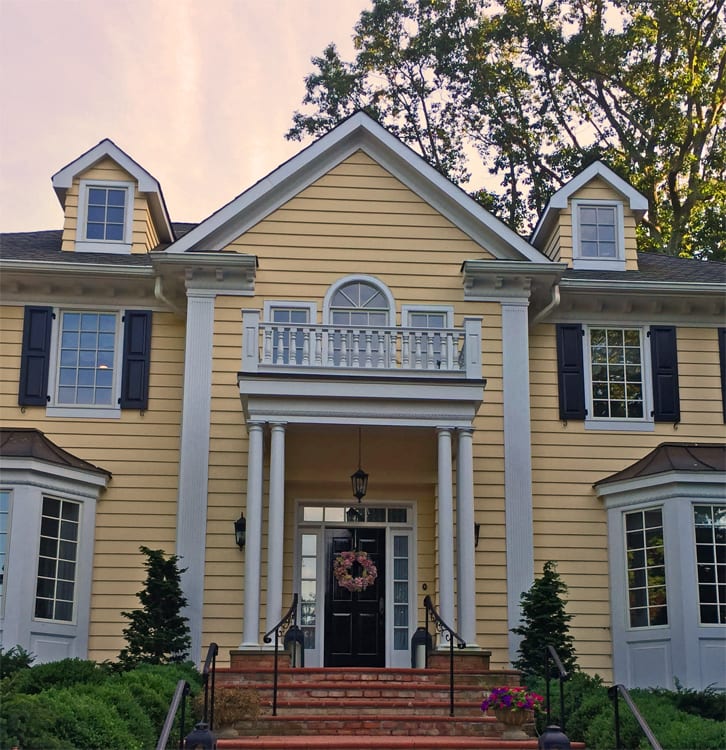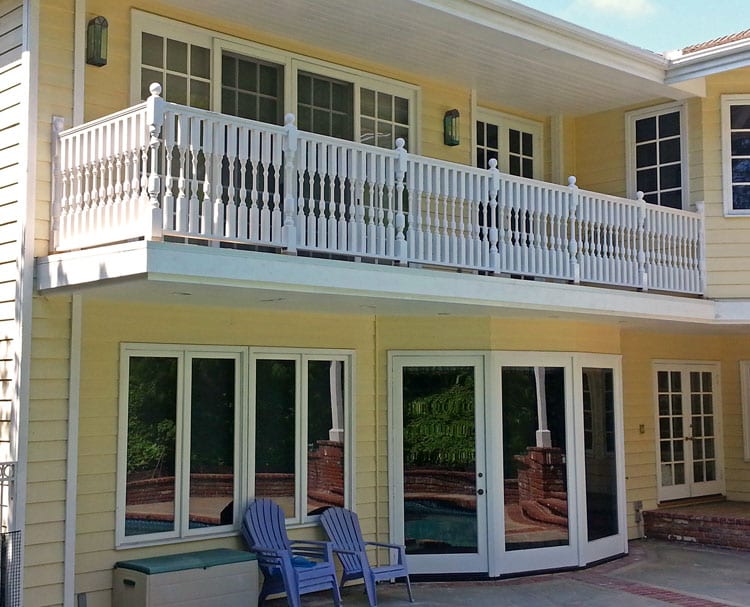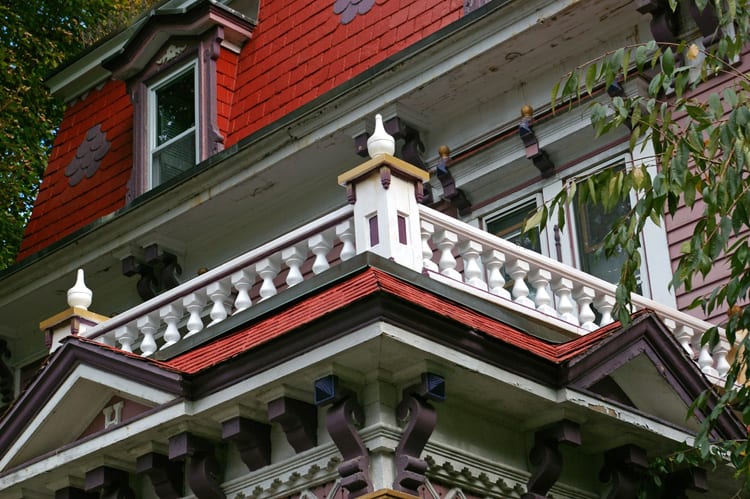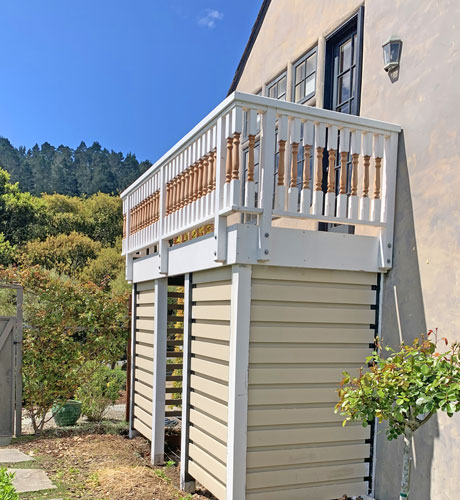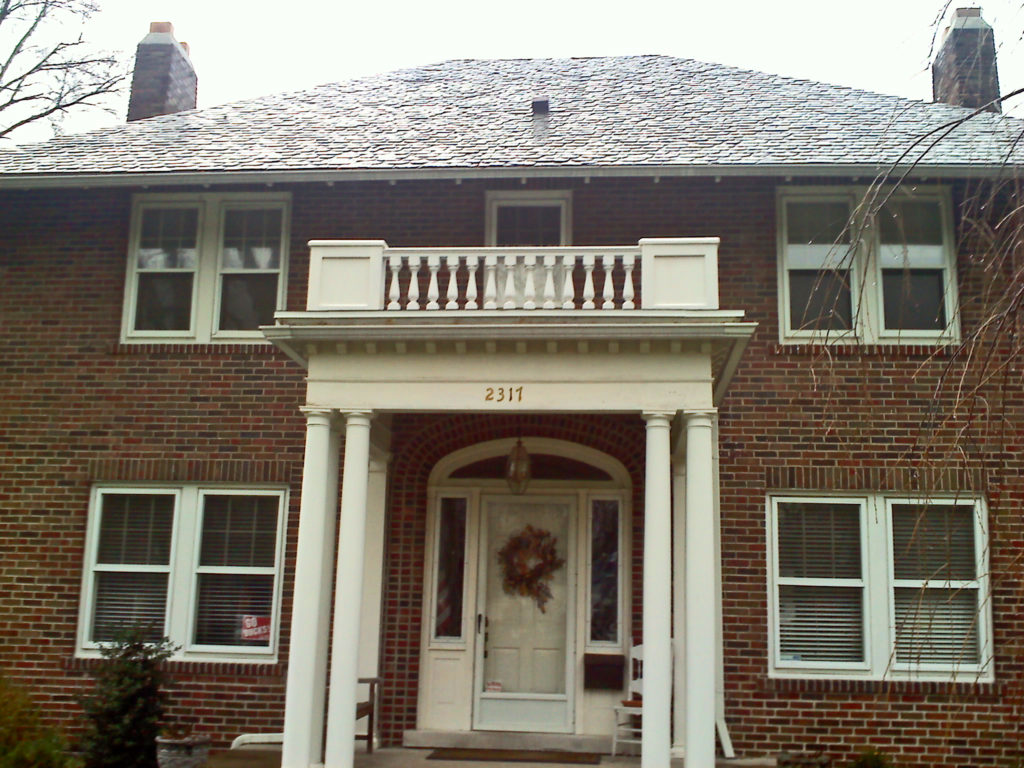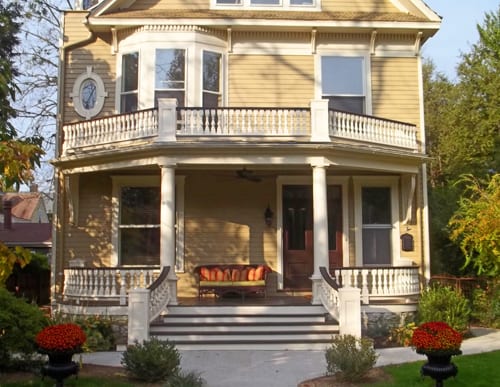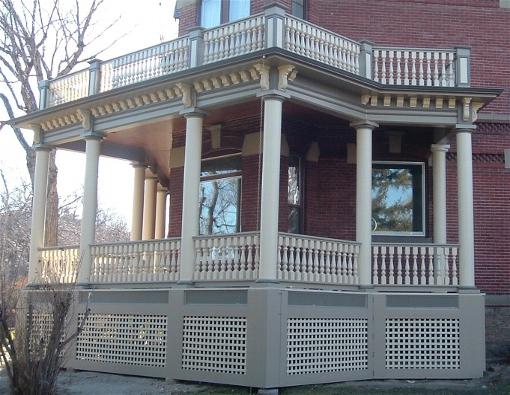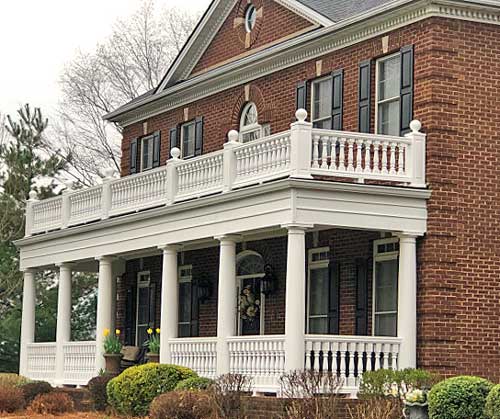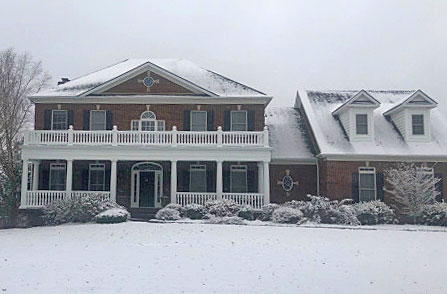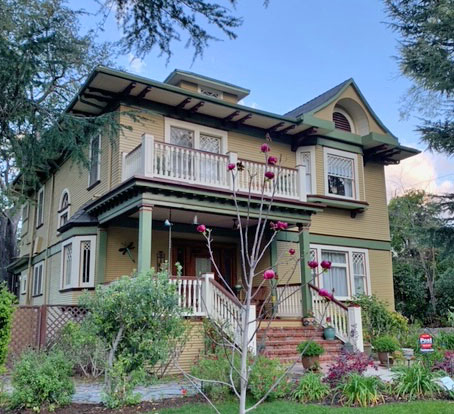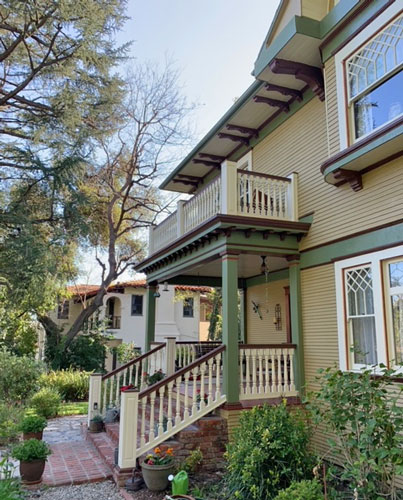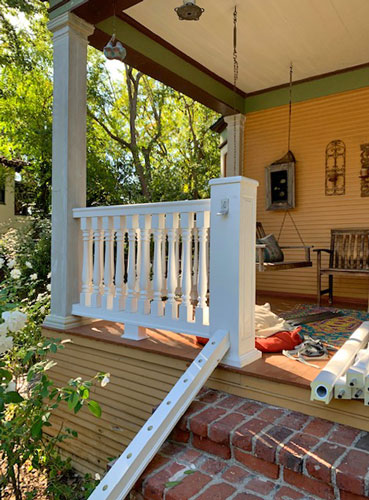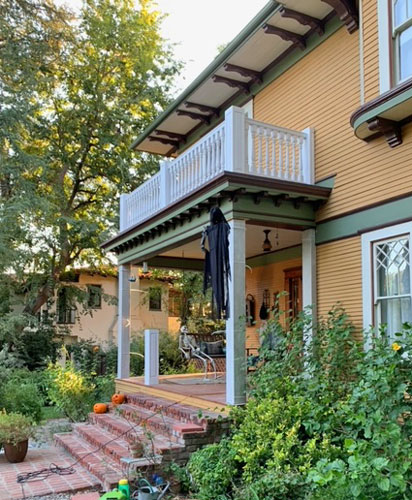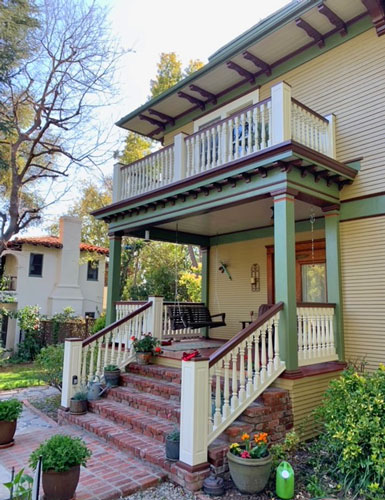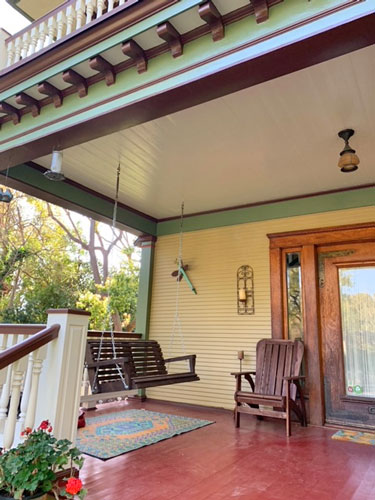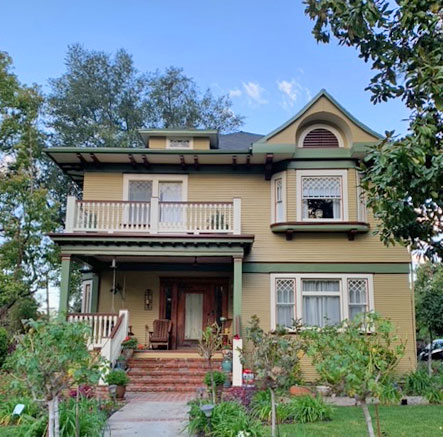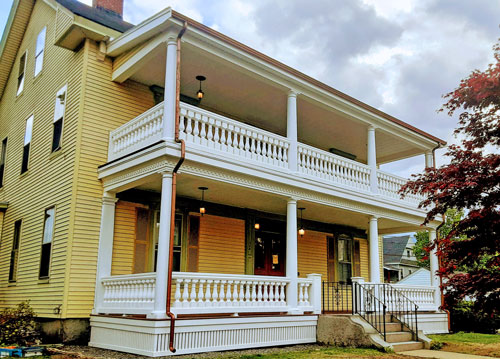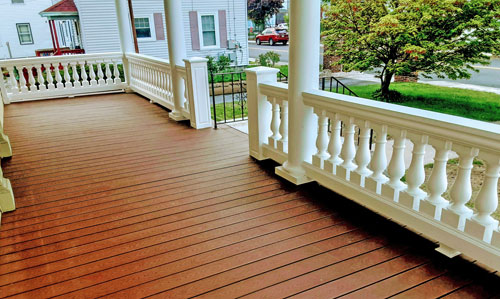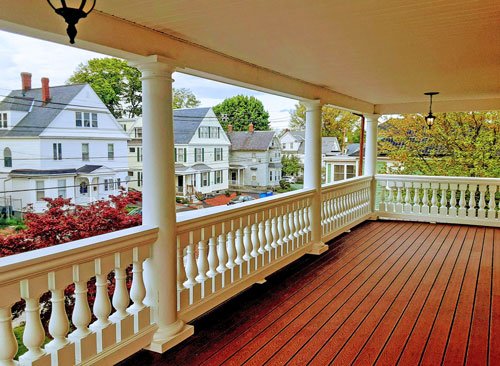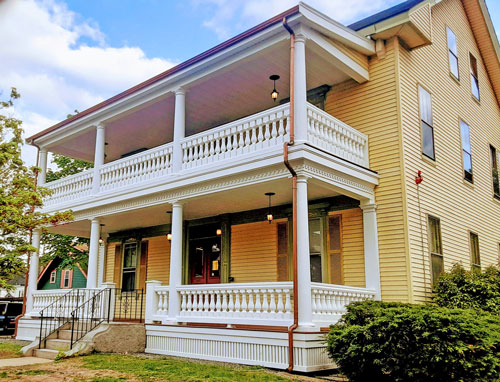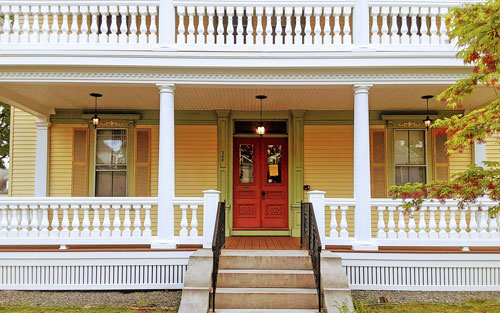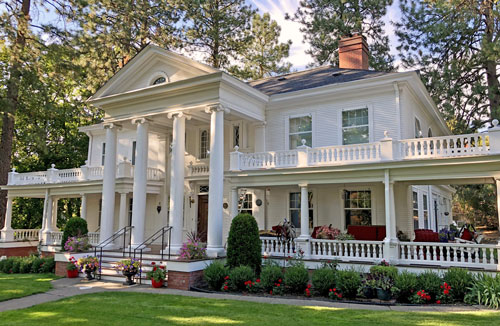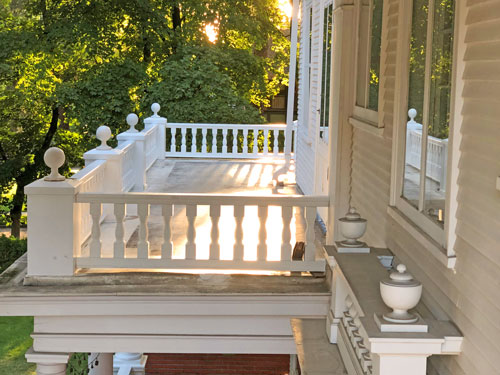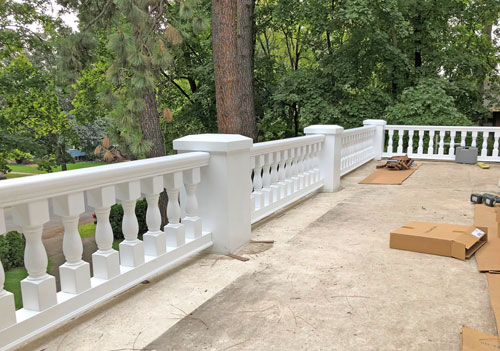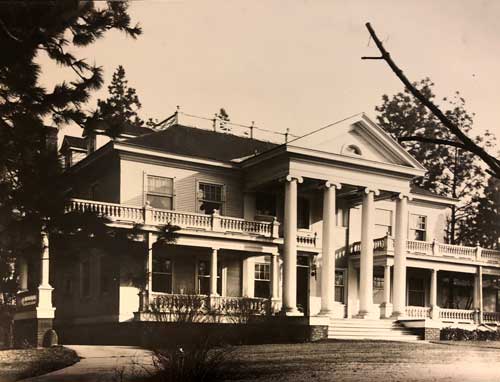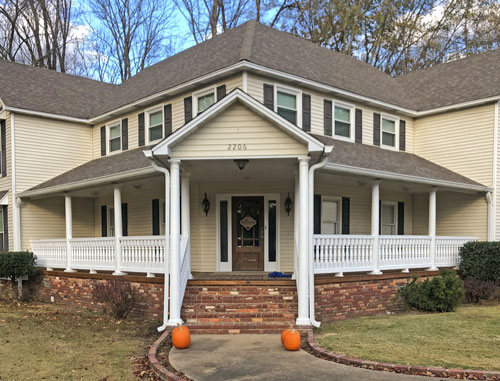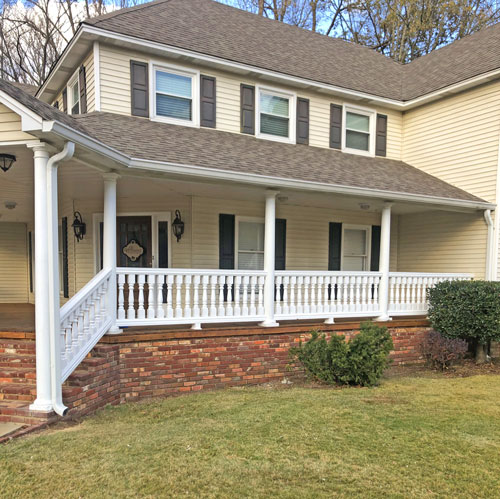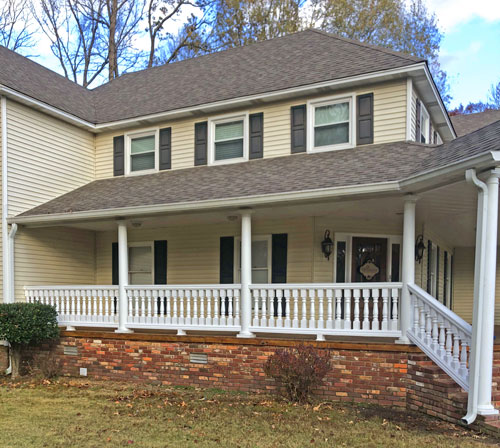
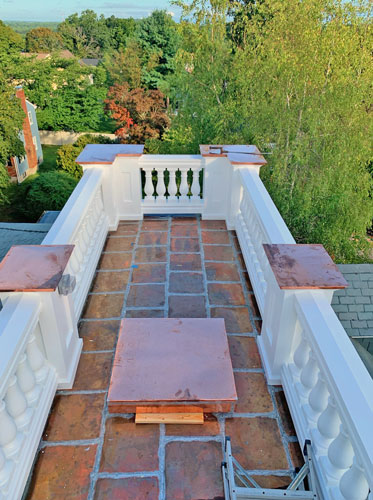
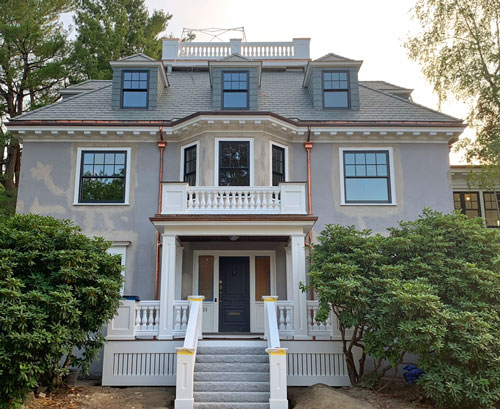
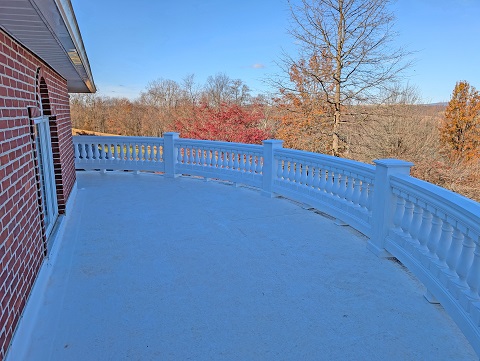
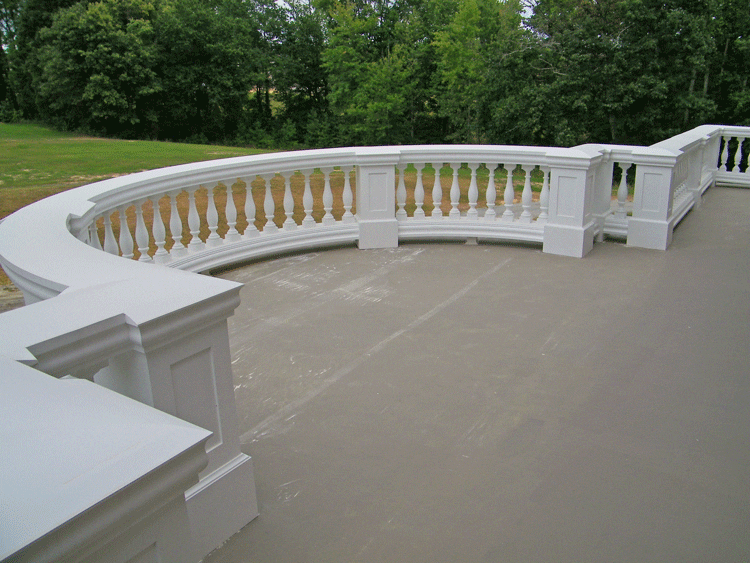
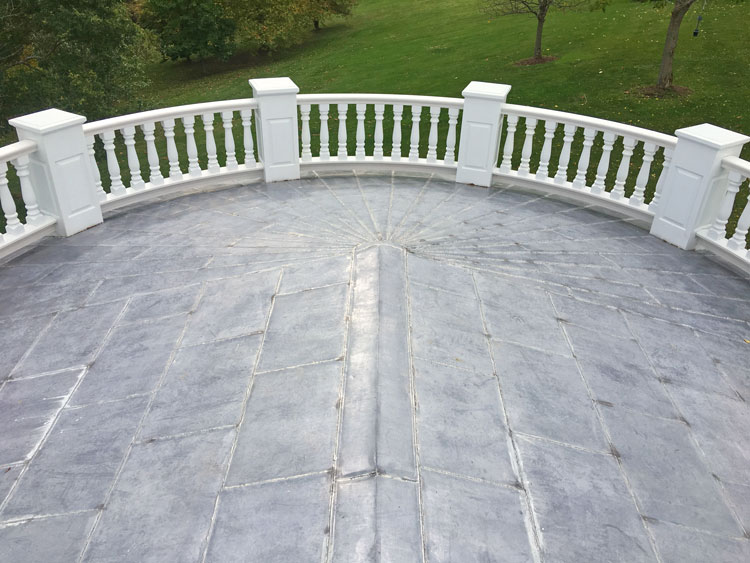
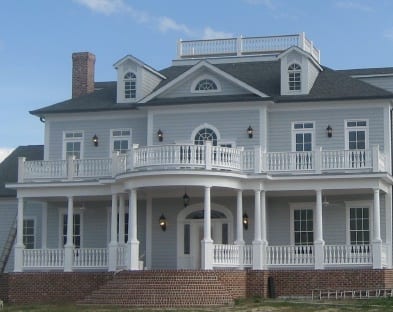
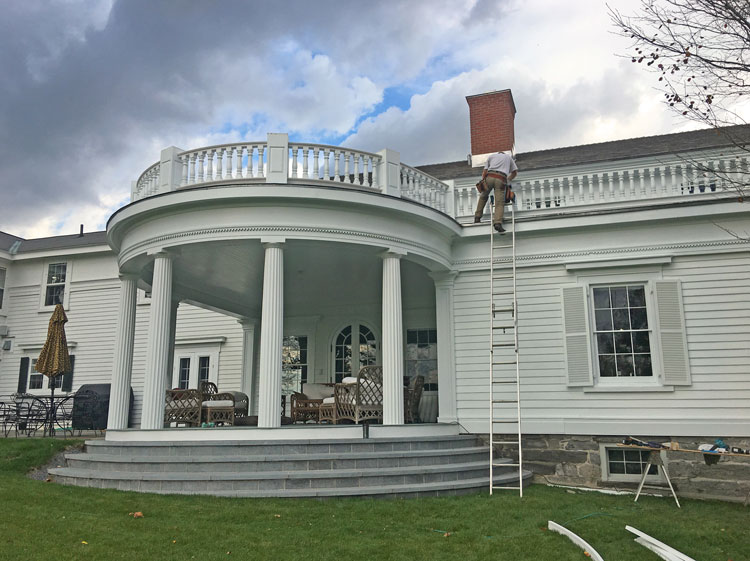
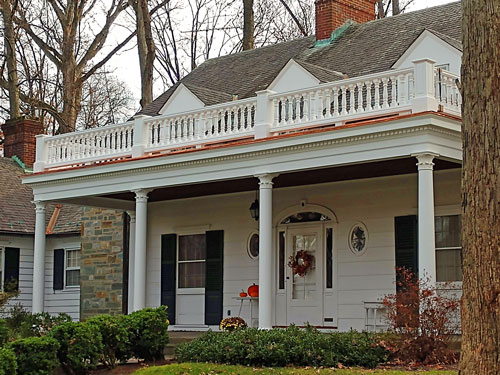
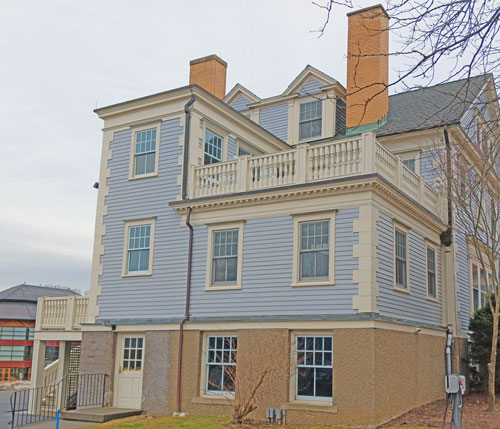
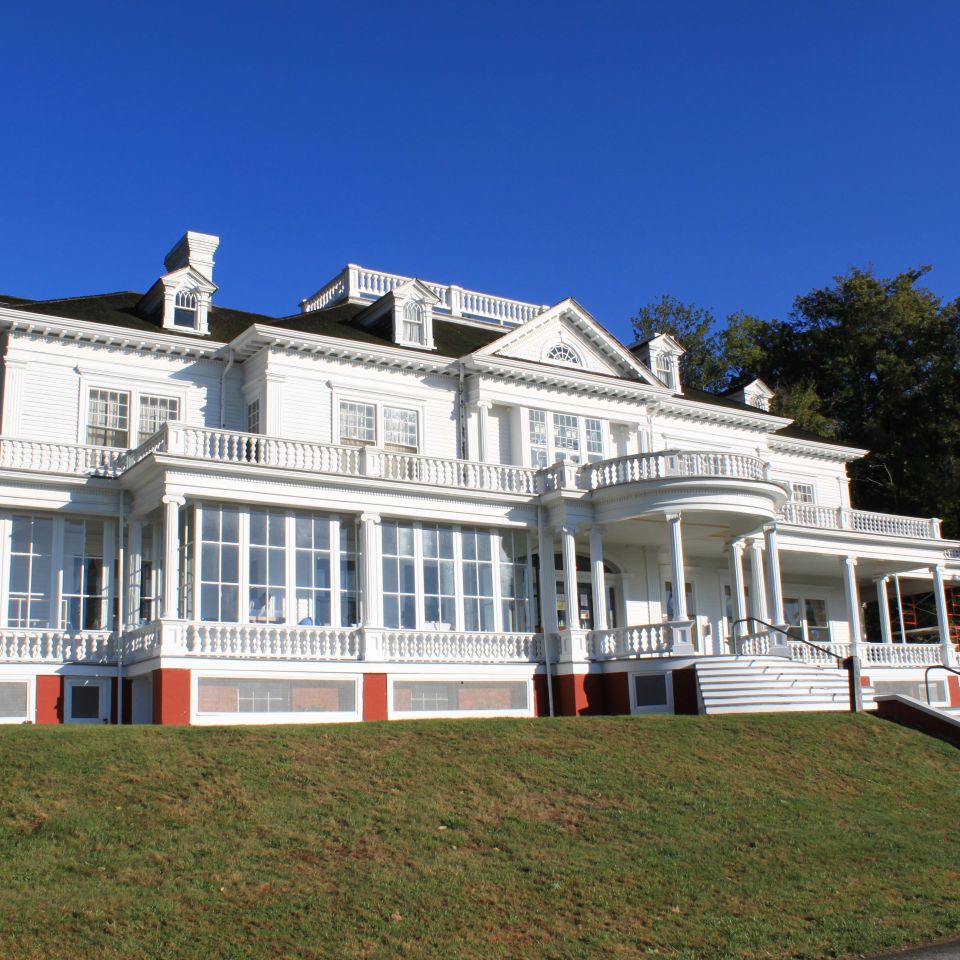
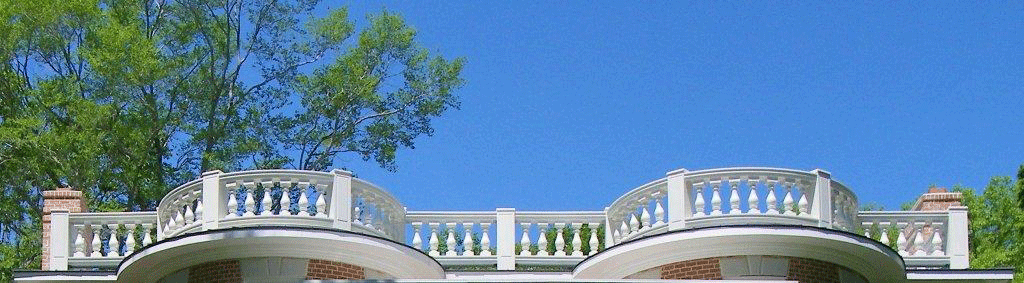
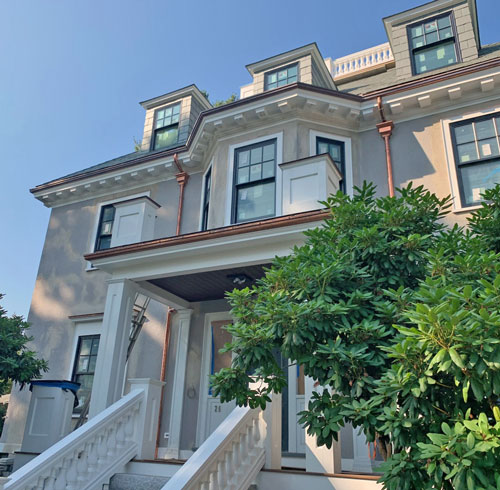
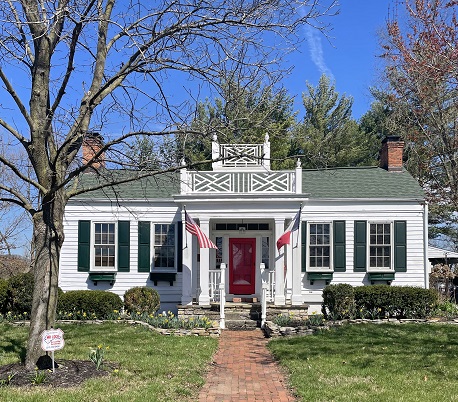
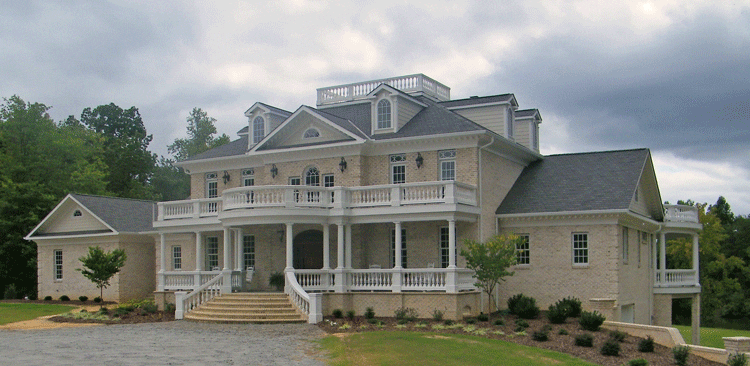
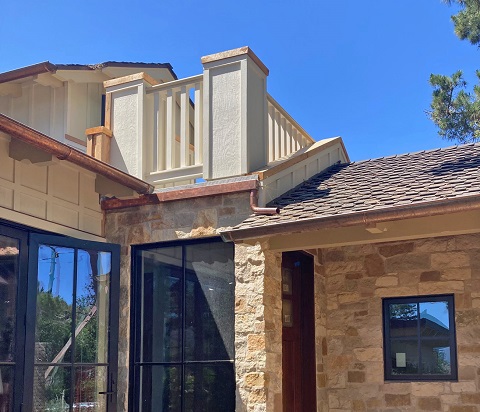
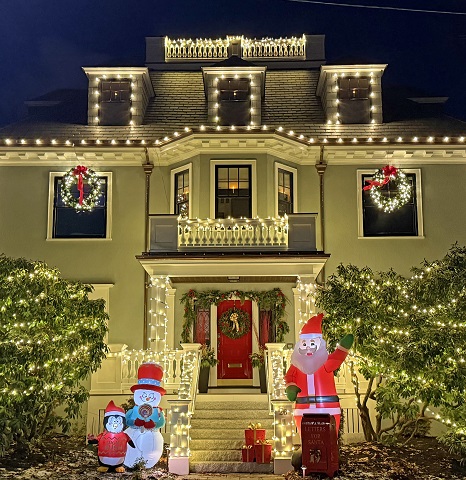
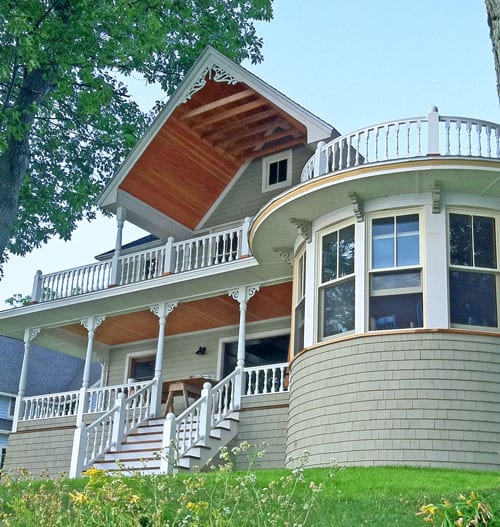
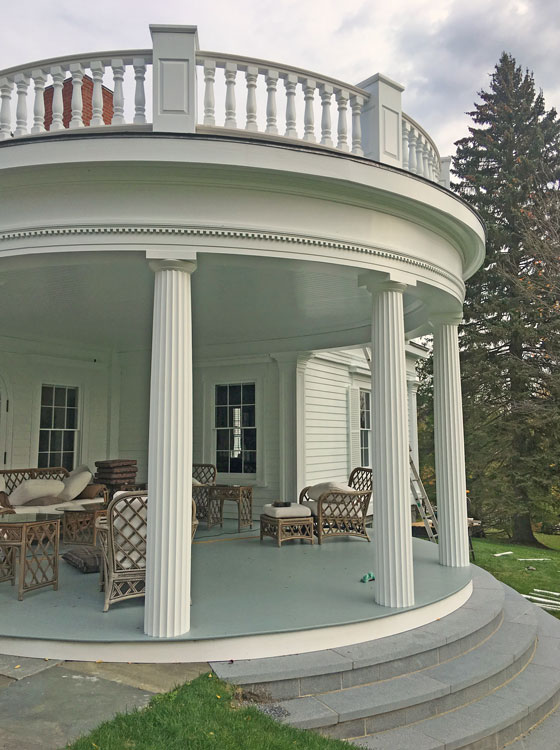
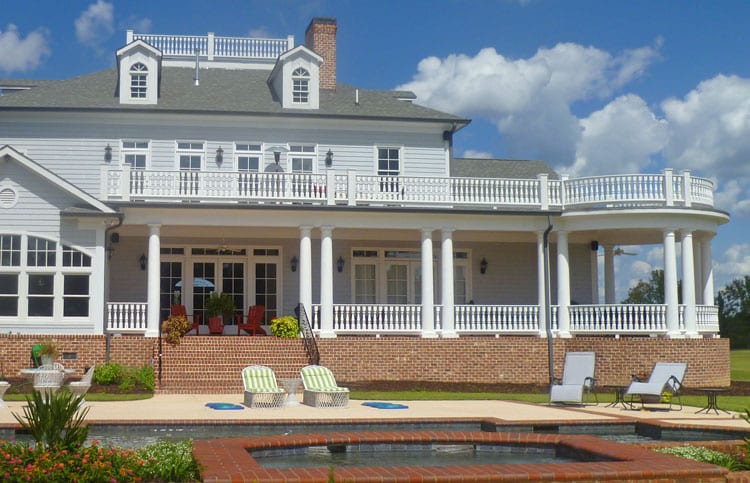
There are a couple types of rooftop railings, so let’s clarify. A Widow’s Walk is an architectural element that shows prominently on the very top of a roof and is intentionally sky-lined for a beautiful effect. Other rooftop railings can be a faux rail on top of a portico or covered porch roof. Many of those create the look of an accessible upper level but are in fact decorative. There is some crossover between this article and another gallery post we made for Balcony Railing Ideas. Click that link and you’ll see some similar project photos that feature not only balcony rails, but also quite a few portico roof railings.
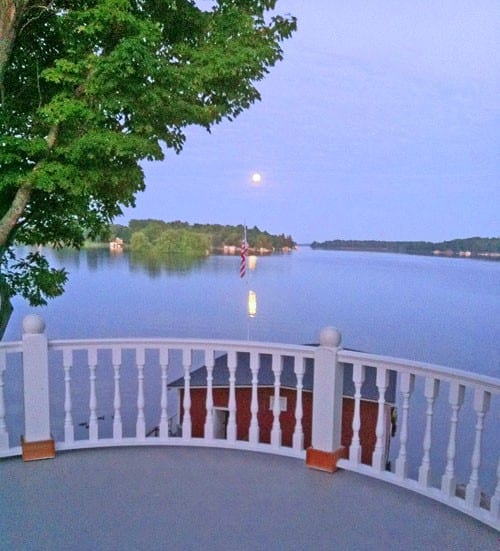
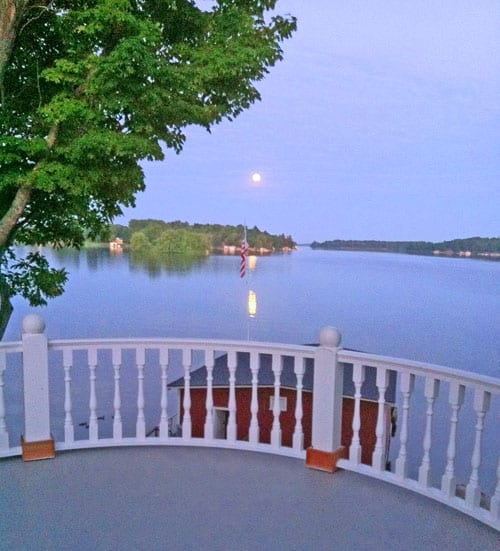
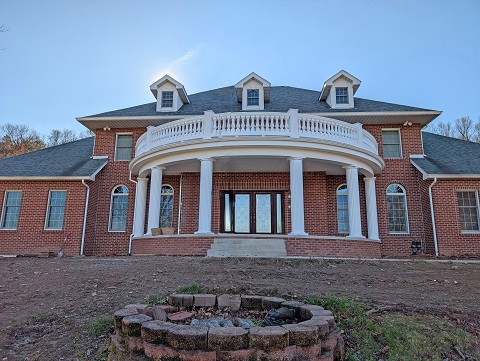
This gallery is intended to help you visualize your rooftop railing and perhaps get ideas for your project.
Guardrail for a Rooftop
If the roof area or widow’s walk is meant to be accessible, you’ll need to meet guardrail codes. In most states, this means 36″ high (residential) or 42″ high (commercial). Some states or localities require higher so check before you buy. Our railings are tested and meet IBC and IRC code requirements.
If the area is not intended to be accessed, then you have more options. Historically speaking, many rooftop rails were shorter. For example, you can use a 20″ high spindle with our 5 1/2″ railing for a 30″ top rail height. Not only can this be more architecturally correct, but it better allows you to see out over the rail in areas with dormer windows or the like.
We see many “before and after” pictures from customers, and the transformation is amazing. The addition of a rooftop railing can change your home from unnoticeable to show-stopper.
Actual feedback we’ve had from customers: “I have people just stop in off the road to see it.”, and “We have had so many compliments from friends, neighbors, and many strangers walking by the house.”, and my personal favorite: “You have no idea how many compliments we get. Strangers that are walking or driving wave at us as they go by, as they are embarrassed that they slow down so much to look, that we look back at them, so they wave like we are long lost buddies.”
Take your time and go through these pictures to help you generate rooftop railing or widow’s walk ideas for your project.
What materials should I use on my rooftop railings?
There are pros and cons for each material when deciding between natural wood or synthetic for your exterior millwork. The top of a roof is one area where synthetic railing systems have a clear advantage .
Wood railing is the choice of many because of it’s beauty and authenticity. We use rot resistant Cedar, and have designed our railings to help shed water which will help them last. It is an excellent choice for porch railings that are partially exposed to the elements, such as a covered porch. Because of the exposed nature of rooftop railings, always in direct contact with the elements, we recommend our customers consider our synthetic (Poly) option.
We chose polyurethane as our synthetic alternative because it so closely mimics wood in it’s look and feel. It has the clean crisp lines that makes wood railings so beautiful. And has similar density to cedar which gives it it’s authentic feel. In other words, our poly railing looks, feels, and sounds like wood when you have your hands on it. But even on a rooftop or widow’s walk, it will not take on moisture, crack in the sun, or rot due to fungus. It really is the best marriage of durability and authenticity for a such an important architectural element as a widow’s walk.
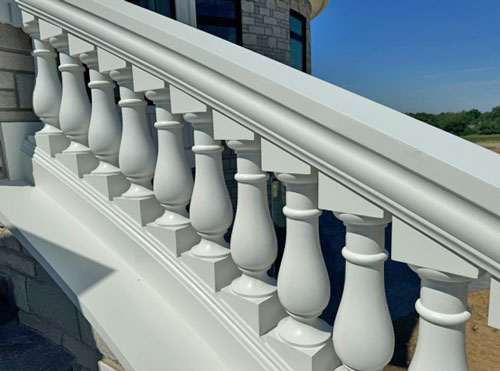
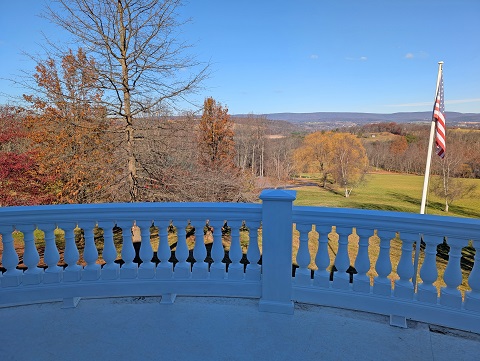
5 1/2″ Poly Balustrade is a customer favorite for rooftop railing. For those wanting a larger and more robust option, our 7 1/4″ Poly Balustrade is very popular.